


.png?imageMogr2/crop/220x71/gravity/center/format/webp)

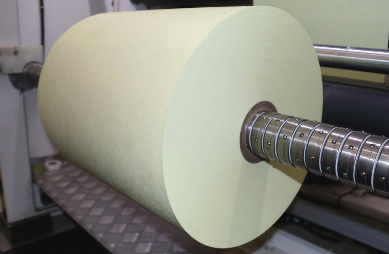
Para-aramid Paper: Delivering Premium Lightweight Solutions for Aerospace and Low-Altitude Economy
Advancing the frontiers of material science with high-performance Para-aramid Paper, engineered for the most demanding structural applications in modern aviation and beyond.
The Strategic Shift Toward Lightweight Excellence
In the rapidly evolving landscapes of the aerospace industry and the emerging low-altitude economy, the quest for weight reduction without compromising structural integrity has reached a critical tipping point. Engineers and manufacturers are increasingly facing a dual challenge: the need to reduce fuel consumption and carbon emissions while simultaneously increasing the payload and safety of flight vehicles. Traditional metallic components, once the gold standard, are being surpassed by advanced composite materials that offer superior strength-to-weight ratios.
As the industry pivots toward sustainable aviation and advanced air mobility (AAM), Para-aramid Paper has emerged as the cornerstone material for high-performance honeycomb structures. Whether it is for the secondary load-bearing parts of a commercial airliner or the fuselage of a cutting-edge eVTOL (electric Vertical Take-off and Landing) vehicle, the performance of the core material dictates the success of the entire system. Chambroad, a leader in chemical and material solutions, is at the forefront of this transformation, providing specialized Para-aramid Paper that meets the rigorous demands of the next generation of transportation.
What Exactly is Para-aramid Paper?
To understand the value of Para-aramid Paper, one must first appreciate the molecular engineering behind it. Para-aramid, or poly(p-phenylene terephthalamide), is a synthetic fiber known for its incredible tensile strength and thermal stability. When processed into a specialized "paper" form, it creates a non-woven matrix that serves as the base for honeycomb core production.
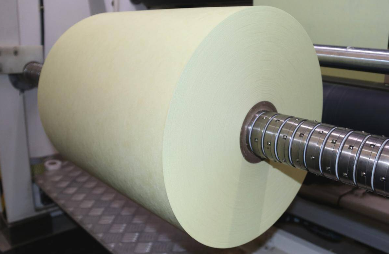
Unlike its cousin, meta-aramid paper, Para-aramid Paper provides significantly higher stiffness and strength. This makes it ideal for applications where every gram of weight saved translates into enhanced range and efficiency. At Chambroad, our Qianbolun 531 series represents the pinnacle of this technology, utilizing advanced Para-aramid Nanofibers to ensure exceptional fiber dispersion and bonding.
Deep Dive: The Chambroad Solution for High-Performance Structures
Chambroad’s commitment to innovation is reflected in our integrated approach to material science. Our Para-aramid Paper is not just a raw material; it is a high-engineered substrate designed for the fabrication of aramid honeycomb cores, laminates, and specialized structural components.
1. Nanofiber Dispersion Technology
A critical hurdle in producing high-quality Para-aramid Paper is the inert chemical nature of the fibers. Chambroad utilizes a proprietary "one-step" shear method to produce Para-aramid Nanofibers. This technology ensures that the nanofibers act as a binder, filling the gaps between larger fibers and creating a highly uniform, dense structure that improves resin absorption and mechanical interlocking.
2. Advanced Manufacturing Processes
Our production line incorporates slant-wire forming and high-temperature calendering. These processes ensure that the Para-aramid Paper possesses consistent thickness, high porosity for resin impregnation, and excellent dimensional stability under extreme temperatures exceeding 400 degrees Celsius. This level of precision is vital for creating honeycomb panels used in:
- Commercial aircraft cabin interiors and floor panels.
- High-speed rail fairings and structural partitions.
- Marine bulkheads and low-temperature cargo tank supports.
Why Choose Chambroad Para-aramid Paper?
Extreme Weight Reduction
With a density significantly lower than aluminum, our Para-aramid Paper allows for the creation of ultra-lightweight sandwich panels, increasing the operational efficiency of aerospace fleets.
Superior Thermal Resistance
Exhibiting excellent flame retardancy and thermal insulation, this material maintains its mechanical properties even in high-heat environments common in aerospace propulsion zones.
Environmental Durability
Resistant to corrosion, moisture, and common aerospace chemicals, ensuring a long service life and reduced maintenance cycles for structural components.
Empowering the Low-Altitude Economy
The "Low-Altitude Economy" is more than just a buzzword; it is a burgeoning industrial sector encompassing drones, air taxis, and logistics UAVs. These vehicles require materials that offer high stiffness to handle aerodynamic loads while being light enough to maximize battery life.
By integrating Para-aramid Paper into the airframe design, manufacturers can achieve the high rigidity-to-mass ratio required for stable flight. Furthermore, Chambroad’s materials like our Polyolefin Elastomer (POE) and specialized Polypropylene solutions complement the structural use of aramid paper, providing a holistic material ecosystem for high-tech mobility.
Manufacturing Excellence and Global Recognition
Based on our extensive experience serving global tier-1 aerospace suppliers, Chambroad understands that reliability is non-negotiable. Every roll of Para-aramid Paper undergoes stringent quality control, from fiber synthesis to final calendering. Our facilities are equipped with state-of-the-art testing equipment to verify tensile strength, dielectric properties, and resin compatibility.
In addition to our aramid solutions, we offer a diverse portfolio of high-performance materials, including Chlorinated Butyl Rubber for sealing systems and modified wood materials for high-performance construction. This breadth of expertise allows us to cross-pollinate technologies and deliver superior value to our partners.
Meet Us at CHINAPLAS 2026
We are excited to announce that Chambroad will be showcasing its latest material innovations, including our newest Para-aramid Paper grades, at CHINAPLAS 2026. Join us from April 21–24 to discuss how we can solve your toughest engineering challenges.
Location: World Expo Exhibition & Convention Center
Booth: 6.2 A02
Frequently Asked Questions (FAQ)
Q: What is the difference between meta-aramid and Para-aramid Paper?
A: Para-aramid Paper offers significantly higher tensile strength and modulus compared to meta-aramid paper. This makes it more suitable for high-stress structural applications like honeycomb cores, whereas meta-aramid is often used for electrical insulation.
Q: Can Chambroad provide customized thickness for specific aerospace designs?
A: Yes, our slant-wire forming technology allows us to adjust paper thickness and porosity to meet the specific requirements of our clients' resin systems and mechanical specifications.
Q: Are samples available for testing?
A: Absolutely. We provide samples of our Qianbolun series, including the 531 Para-aramid Paper and N502 nanofibers, for industrial evaluation and R&D testing.
Q: How does the nanofiber technology improve the paper's performance?
A: The nanofibers act as a mechanical bridge, improving the bonding between the para-aramid fibers. This results in better shear strength in the final honeycomb structure and more uniform resin distribution.
Ready to Elevate Your Structural Performance?
Download our technical data sheets or contact our engineers for a custom consultation on how Para-aramid Paper can revolutionize your lightweight design.
© 2026 Chambroad Chemical Solutions. All Rights Reserved. All product names and logos are trademarks of Chambroad.