




.png?imageMogr2/crop/220x71/gravity/center/format/webp)

Para-aramid nanofibers have moved from academic curiosity to a serious candidate for next-generation lithium battery separators, mainly because of one number: a shutdown-resistant membrane that holds its structure above 400°C instead of collapsing near 130–160°C like polyolefin separators. For battery material teams, that temperature margin is no longer optional. Fast charging, high-nickel cathodes and dense pack designs keep pushing cell-level heat loads upward, and separator integrity under abuse has become a headline safety metric.

But a promising mechanism is not a qualified material. The distance between a lab-scale demonstration and a released separator coating or membrane is measured in qualification protocols, and those protocols are only as good as the questions asked before they are written. Buyers who treat nanofiber evaluation like an ordinary resin or coating qualification routinely miss the questions that actually predict field performance. This article organizes those questions into six domains, so your qualification plan interrogates the material from every direction that matters.
Why a Data Sheet Cannot Answer Qualification Questions
A datasheet describes one sample, measured one way, at one point in time. Qualification asks a different question: will every batch, processed on our line, inside our cell design, behave the same way for the life of the platform? Those are not the same question, and nanofiber materials widen the gap for three reasons.
First, performance depends on morphology — fiber diameter distribution, network structure and how uniformly the fibers disperse — which is far more sensitive to process conditions than a pellet melt index ever was. Second, the material enters the cell through an intermediate step (a coating dispersion, a freestanding membrane, a composite layer), so cell-level outcomes depend on the supplier's material and the customer's process, and the boundary of responsibility must be defined explicitly. Third, the supply base is young; long historical batch records do not exist the way they do for polyolefins, which makes forward-looking consistency commitments unusually important.
Every question below is designed to convert one of those gaps into written, verifiable evidence. For the underlying thermal mechanism, see our earlier technical article on para-aramid nanofibers and thermal stability in lithium batteries; here the focus is on what to ask before signing a qualification plan.
Questions on Fiber Morphology and Dispersion
Nanofiber performance in a separator is a network property, and the network is only as good as its dispersion. A supplier can report an average fiber diameter and still ship material that agglomerates. The questions that separate a robust dispersion from a fragile one:
- What is the full diameter distribution, not just the mean? Ask for a histogram and the coefficient of variation, measured on production-representative material, not a lab champion sample.
- Which dispersion media are validated? Para-aramid nanofibers prepared by low-temperature solution polymerization with a shear-assisted one-step process can disperse uniformly in water and most organic solvents — but "most" is not "yours." Ask which specific solvent systems the supplier has verified, at what solids loading, and with what shelf life.
- How is agglomeration detected and bounded? Request the supplier's own test method for agglomerates and their acceptance threshold. A dispersion that looks fine today but gels after 48 hours in the coater tank is a qualification failure discovered too late.
- What happens in your binder system? Dispersion stability in deionized water says little about stability in a PVDF, SBR or CMC formulation. Insist on compatibility testing in your actual coating recipe, or ask for the supplier's data in a recipe as close to yours as possible.
The chemical point behind these questions: conventional para-aramid fibers are chemically inert and hard to bond at interfaces, which is precisely the problem nanoscale fibers were developed to solve. A nanofiber dispersion that also behaves like an inert commodity fiber is not delivering the advantage you are paying for.
Questions on Thermal Performance and Shutdown Behavior
Thermal stability is the headline claim, so it deserves the hardest interrogation. Para-aramid does not melt, and quality nanofiber membranes retain dimensional stability far beyond the range where polyolefin separators soften — with breakthrough (film-rupture) temperatures above 400°C cited for battery-grade material. But the qualification questions are about measurement discipline, not the number itself:
- What method defines the reported temperature, and on what specimen? A breakthrough temperature measured on a neat nanofiber membrane and one measured on a coated PE composite are different results. Ask which configuration the number describes, and require testing on the configuration you will actually ship.
- What is thermal shrinkage at 150°C, 200°C and 300°C? Rupture temperature is the last line of defense; dimensional stability in the operating and abuse range is the daily one. Ask for shrinkage data at multiple temperatures and hold times, in both machine and transverse directions.
- How is the number batch-controlled? A single impressive TGA curve is marketing; a Cpk on rupture temperature across production batches is qualification evidence. Ask how the supplier intends to control and release this parameter.
- What does the complete abuse sequence show? Nail penetration, overcharge and thermal ramp tests at cell level are the customer's job — but the supplier should state clearly which separator-level tests support their claims, with test conditions attached.
Questions on Coating and Process Compatibility
Most teams will first meet para-aramid nanofibers as a coating on existing PE/PP separators or as a component in composite membranes, rather than as a drop-in replacement. That makes process compatibility a qualification domain of its own:
- What are the recommended formulation windows? Solids loading, binder ratio, viscosity range and expected pot life — in writing, with the test conditions that define them.
- What coat weight range has the supplier validated, and what is the sensitivity around it? A coating that works only at one narrow grammage will fight your line's normal variation.
- How does the coating interact with your drying profile? Ask about drying temperature limits and whether the network restructures with heat, because the same heat that cures your binder can also change the pore structure you qualified.
- What support exists for integration trials? Some suppliers run sample coatings on customer-supplied base film; others ship dispersion only. Know which you are buying before the qualification schedule is written, not after.
Beyond separators, the same dispersion and film-forming behavior supports adjacent applications — aramid paper making, specialty coatings, composite reinforcement, filtration and electrical insulation — which matters strategically: a supplier whose platform serves multiple markets is more likely to sustain production volume through demand cycles. Chambroad's Qianbolun N502 para-aramid nanofiber is positioned for exactly this span, with battery separators listed among its primary application scenarios.
Questions on Batch Consistency and Production Scale
For an emerging material, the scale-up question is not "can you make it?" — it is "can you make the same thing repeatedly, and prove it?"
- What is the demonstrated batch record? Ask for consistency data across the most recent production batches: diameter distribution, dispersion stability, thermal parameters, not just one certification of conformance.
- Which parameters will appear on the certificate of analysis, and which are controlled but not reported? Both lists matter. The first defines your incoming inspection; the second reveals process maturity.
- What is the capacity roadmap against your program volume? A material qualified today that cannot supply the program's year-three volume is a requalification waiting to happen.
- What retention and traceability system exists? Retained samples and batch traceability are what make a field issue diagnosable instead of catastrophic.
Questions on Integration Paths and Cell-Level Validation
Before drafting the qualification protocol, decide — jointly with the supplier — which integration path you are qualifying. The three routes carry different validation burdens:
- Ceramic- or aramid-nanofiber coating on PE/PP: fastest to trial; the base film remains the shutdown mechanism, so the qualified claim is "improved thermal margin," not full replacement.
- Freestanding nanofiber membrane: the full thermal benefit, but you are qualifying a new separator class — pore structure, ionic conductivity, mechanical handling and wettability all need their own protocols.
- Composite structures: often the engineering optimum, but the interfaces between layers become the new risk points and must appear in the test plan.
For each path, agree in advance who runs cell-level tests (ionic conductivity, interfacial resistance, cycle life, abuse), who owns the fixtures, and what data format the results return in. Ambiguity here is the most common reason a promising material stalls in phase two. Teams working on cell hardware will also find Chambroad's broader battery structural components portfolio relevant when the separator qualification connects to pack-level design work.
Questions on Documentation and Change Control
Nanofiber properties are process-history properties. A change in solvent, shear regime or drying conditions that never appears on a datasheet can still move the diameter distribution — which is why change control deserves explicit contract language:
- Which changes trigger prior notification, and how far in advance? Process route, dispersion chemistry, drying parameters and production site should all be on the list.
- Does the supplier commit to requalification support after a change? The commitment should name who performs retesting and who pays for it.
- What documentation ships with every batch? CoA scope, retention samples, and traceability to the production record — not a generic datasheet PDF.
A Compact Question Checklist for Your Qualification Plan
| Domain | Core Question | Evidence to Request |
|---|---|---|
| Morphology | Is the fiber network uniform and fully dispersed in our system? | Diameter histogram, CV, dispersion stability data in your solvent/binder recipe |
| Thermal | Does the film hold structure beyond the polyolefin collapse range? | Rupture temperature method + data on your configuration, shrinkage at 150–300°C, batch Cpk |
| Process | Will it run on our coater without fighting normal line variation? | Formulation windows, validated coat weight range, drying limits |
| Consistency | Can production batches repeat the qualified sample? | Multi-batch data, CoA parameter list, capacity roadmap |
| Integration | Which integration path are we qualifying, and who tests what? | Written division of cell-level testing responsibilities |
| Change control | Will we know — in advance — if the material changes? | Notification triggers, lead times, requalification support terms |
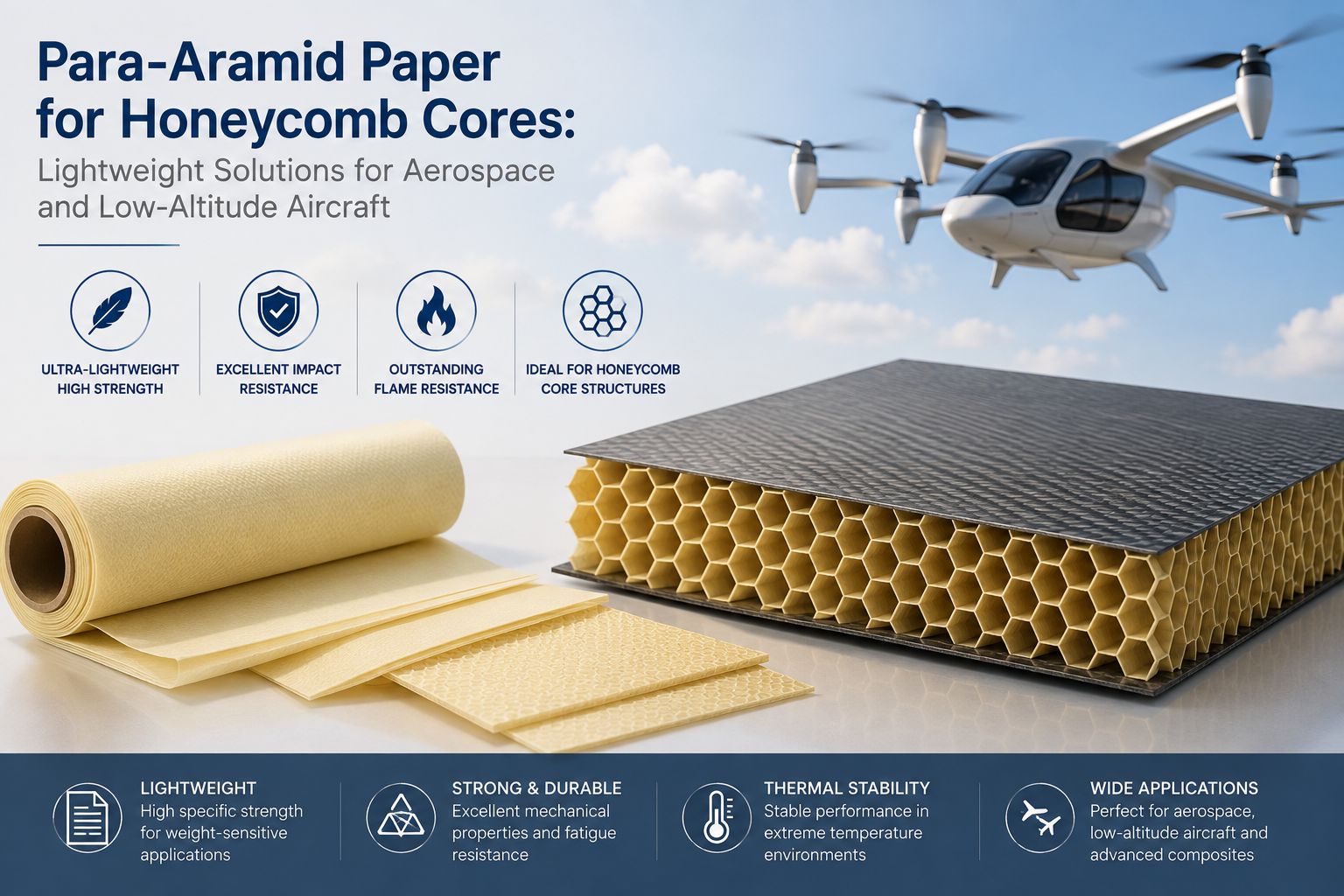
One final structural point: para-aramid nanofibers are a platform, not a single-application product. The same material serving separators also serves high-performance para-aramid paper for honeycomb and electrical insulation uses, and Chambroad's aramid product line spans fibers, papers and nanofiber grades. A supplier with that breadth has survived contact with more than one demanding qualification process — which is, in the end, one more useful thing to ask about.
Preparing a material qualification plan for battery separators? Contact Chambroad to discuss para-aramid nanofiber grades, dispersion options and the documentation set your qualification file will need.
